



Dental emergencies are stressful, painful, and often happen at the worst possible time. This guide tells you exactly what to do, who to call, and what to expect, whether it is a knocked-out tooth, severe toothache, or a suspected abscess. If you need a dentist right now, use our emergency dentist London directory to find same-day appointments near you.
Quick summary:
- Call a dental practice first – most keep same-day emergency slots
- If no practice can see you, call NHS 111 (free, 24 hours)
- For severe swelling, difficulty breathing, or uncontrolled bleeding, go to A and E immediately
Step-by-step: what to do right now
- Call a dental practice directly. Use our emergency dentist London directory to find a practice near you offering same-day appointments. Most practices keep emergency slots available every day – call as early in the morning as possible, as these slots go quickly.
- If no practice can see you, call NHS 111. NHS 111 is available 24 hours a day, 7 days a week and can refer you to urgent dental care. For genuine emergencies you should be offered an appointment within 24 to 48 hours.
- If you have severe swelling, difficulty breathing or swallowing, or significant bleeding that will not stop, go to A and E. These symptoms can indicate a serious infection spreading to the airway. This is a medical emergency, not just a dental one, and needs hospital treatment immediately.
What counts as a dental emergency?
Not every dental problem needs same-day treatment. Knowing what is genuinely urgent helps you get the right level of care without delay.
Genuine emergencies – seek same-day care:
- Severe toothache that is not controlled by over-the-counter painkillers
- Swelling of the face, jaw, or neck (possible abscess – can spread rapidly)
- Knocked-out tooth (time is critical – see the section below)
- Suspected dental abscess (swelling, throbbing pain, fever, unwell feeling)
- Broken tooth with sharp edges causing cuts to your mouth
- Lost crown or filling causing significant pain or sensitivity
- Broken or lost brace wire causing injury to the cheek or tongue
- Bleeding after an extraction that will not stop after 20 minutes of pressure
Urgent but can usually wait a few days:
- Chipped tooth with no pain
- Lost filling with no or mild discomfort
- Lost crown with no pain
- Mild toothache that responds to painkillers
Dental abscess: why it cannot wait
A dental abscess is a bacterial infection that produces a pocket of pus near a tooth or in the gum. It will not go away on its own. Left untreated, the infection can spread to the jaw, neck, and in serious cases the airway, which becomes life-threatening quickly.
Signs of a dental abscess include a persistent throbbing pain, swelling of the face or gum, a bad taste in the mouth, fever, and feeling generally unwell. If you have facial swelling alongside any of these symptoms, call NHS 111 or go to A and E rather than waiting for a routine appointment.
Antibiotics alone do not cure an abscess – the source of the infection needs to be treated by a dentist. If a doctor prescribes antibiotics, you still need to see a dentist as soon as possible.
What to do with a knocked-out tooth
A knocked-out adult tooth can sometimes be reimplanted successfully, but only if you act within about 30 minutes. Speed is everything. The longer the tooth is out of the socket, the lower the chance of saving it.
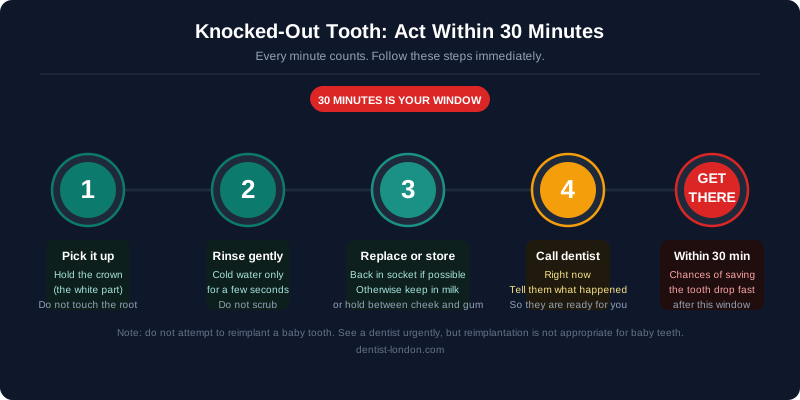
- Pick up the tooth by the crown (the white part), not the root. Do not touch the root surface.
- If it is dirty, rinse it gently with cold water. Do not scrub it.
- If possible, try to put the tooth back into the socket immediately. Hold it in place by gently biting on a clean cloth.
- If you cannot reimplant it, store the tooth in milk, or hold it between your cheek and gum to keep it moist. Do not store it dry and do not put it in water.
- Get to a dentist within 30 minutes if at all possible. Call ahead so they are ready for you.
Note: do not attempt to reimplant a knocked-out baby tooth. This can damage the adult tooth developing underneath. See a dentist as soon as possible, but reimplantation is not appropriate for baby teeth.
Managing pain while you wait
While waiting to see a dentist, these steps can help:
- Take over-the-counter painkillers. Ibuprofen and paracetamol taken together are more effective than either alone – check doses and any contraindications before combining them.
- Apply a cold compress to the outside of your face to reduce swelling. Do not apply ice directly to the tooth.
- Clove oil applied to the gum or tooth with a cotton swab can provide temporary numbing relief – it is available from most pharmacies.
- Avoid very hot, cold, or sweet food and drink, which can make sensitivity and pain worse.
- If you have or suspect a dental abscess, do not apply heat to the area – this can encourage the infection to spread.
Getting care outside normal hours
Dental emergencies do not keep office hours. If you need urgent care in the evening, at the weekend, or on a bank holiday:
- Call NHS 111 – available 24 hours a day, free to call. They will assess your situation and direct you to appropriate care, including urgent dental appointments at evenings and weekends where available.
- Search for extended-hours practices – some London practices offer evening and weekend appointments. Our emergency dentist London directory lists practices across all 32 boroughs, including those with out-of-hours availability.
- A and E for medical emergencies only – hospital A and E departments cannot perform dental procedures, but can treat serious facial infections, significant trauma, airway problems, or bleeding that will not stop.
How much does emergency dental treatment cost in London?
An NHS urgent or emergency dental appointment costs £27.40 (Band 1). If treatment beyond the emergency is needed at the same visit, the charge rises to Band 2 (£75.30) or Band 3 (£326.70) depending on what is carried out. These are the standard NHS charges that apply across England.
Private emergency appointments in London typically cost between £80 and £200 for the consultation and any immediate treatment, with further work quoted separately. If you need out-of-hours or same-day private care, expect to pay toward the higher end of that range.
If cost is a concern, NHS 111 can direct you to NHS urgent dental care at no additional charge. Our London dental costs guide covers full pricing for both NHS and private emergency treatment.
Find an emergency dentist in London
Our emergency dentist London directory covers all 32 London boroughs with phone numbers you can call directly from your phone. You can also search by area – for example north London emergency dentists, south London emergency dentists, east London emergency dentists, or west London emergency dentists.
This guide is for general information only and is not a substitute for professional dental or medical advice. We have done our best to provide accurate and helpful guidance, but every situation is different. If you are in severe pain, have significant swelling, or are concerned about a dental emergency, contact a dental practice or call NHS 111 immediately. In a life-threatening situation, call 999 or go to your nearest A and E.