



Published 10 February 2026
One of the most common questions about NHS dental care in England — and one that catches a lot of people off guard. The short answer is yes, you can see a dentist without being formally registered. But the full picture is a little more nuanced than a simple yes or no.
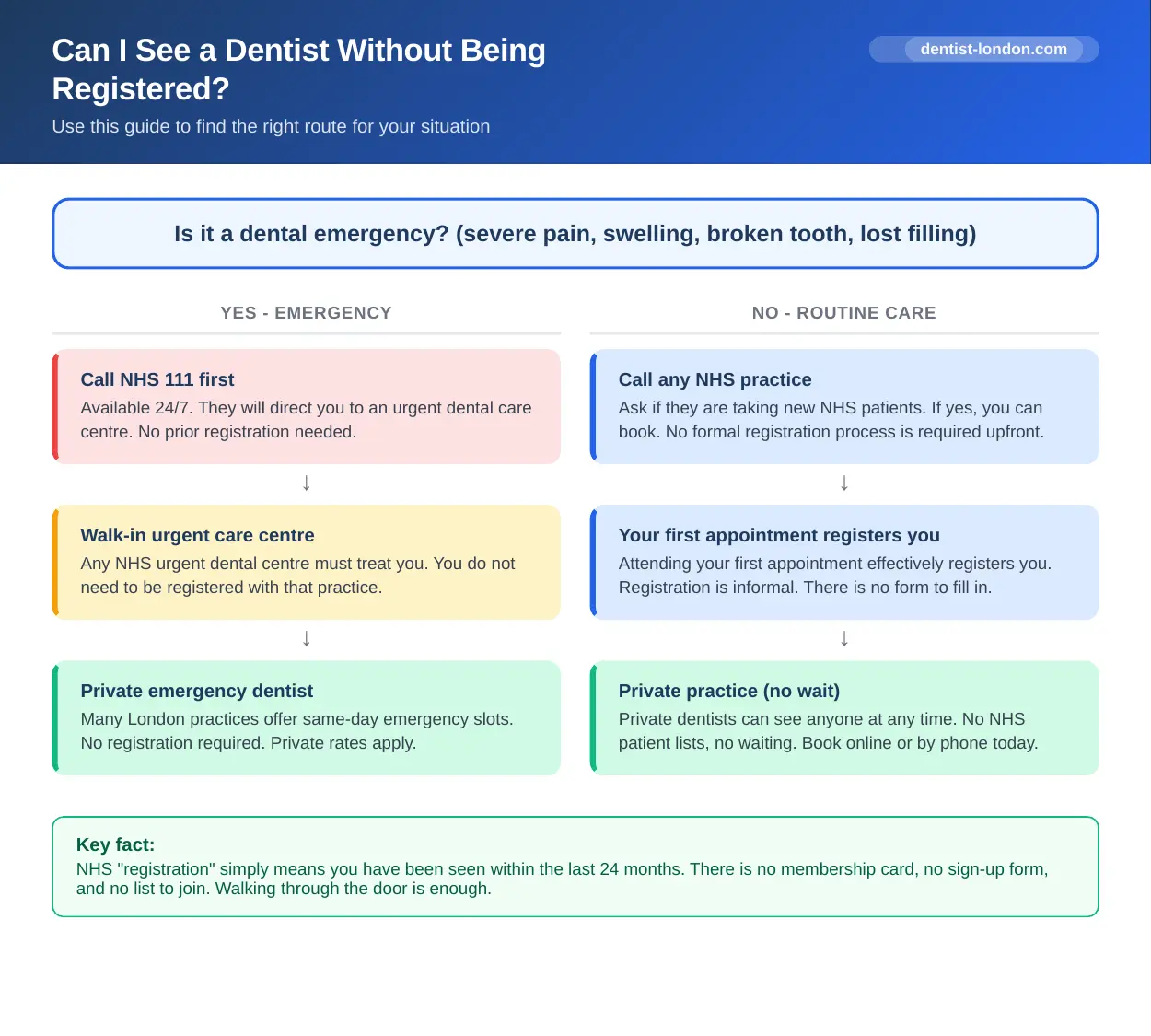
What Does “Being Registered” Actually Mean?
In NHS dentistry, registration is a more informal concept than most patients realise. Unlike GP practices, where you sign a form and are officially added to a list, NHS dental “registration” simply means you are an active patient at a practice — someone who has attended within the last two years. There is no central NHS list of dental patients, and no paperwork to sign when you first join a practice.
When a practice says they are “not accepting new patients,” what they mean is that they do not have NHS contract capacity to take you on. They are not legally barred from seeing you — they simply may not be able to treat you under NHS terms if they are at capacity.
This distinction matters, because it means the door is rarely completely closed. Many practices that cannot offer you an ongoing NHS patient place will still see you for a private appointment, and some will treat emergency dental pain regardless of your registration status.
Can You Walk In Without an Appointment?
Walk-in dental care is limited but it does exist. Some practices offer emergency slots for people who are not registered, and NHS 111 can direct you to urgent dental care services if you are in pain and cannot find a practice to help. These urgent care centres can assess you and provide immediate pain relief, though they may not offer comprehensive ongoing treatment.
If you need routine care rather than emergency treatment, the process is more conventional: find a practice accepting new patients and book. You need no referral from a GP, and no history with the practice.
How Does NHS Treatment Work If You Are Not Registered?
NHS dental charges are the same regardless of whether you have been attending a practice for years or whether this is your very first appointment anywhere. Treatment is grouped into three bands — currently £26.80, £73.50, and £319.10 — covering check-ups and assessments, basic treatment such as fillings, and more complex work respectively. Your registration history has no bearing on what you pay.
However, some practices give priority to their existing patient base when allocating routine appointment slots. New patients — particularly those booking for check-ups rather than urgent treatment — may face a longer wait. In London, where NHS dental capacity is genuinely stretched in many boroughs, finding a practice actively accepting new patients requires some persistence.
What About Private Dentists?
Private practices operate differently. They are not bound by NHS contract capacity, so they can generally see any patient who books and pays. There is no concept of being “on the list” in private dentistry — if you need treatment and are willing to pay private rates, finding a practice willing to see you is usually straightforward.
Private rates vary considerably across London. A routine private check-up typically costs between £60 and £130, with treatment costs priced individually on top of that. Some practices publish their fees online; others will give you a written estimate before any treatment begins, which you should always ask for.
Practical Steps to Get Seen
If You Need Urgent Care
Call NHS 111 and select the dental option. They operate 24 hours a day and can direct you to an urgent dental care service. Describe your symptoms clearly — how long you have had pain, whether there is visible swelling, and whether your ability to eat or sleep is affected. You do not need to be registered anywhere to access this service.
If You Need Routine Care
Use NHS England’s Find a Dentist tool or the NHS dentist listings on this site to find practices in your area accepting new patients. When you call, ask directly whether they have NHS appointments available for new patients. Lists change regularly — a practice that was full three months ago may have capacity now.
If You Have Just Moved to London
If you had an NHS dentist elsewhere in the UK, you will need to register with a London practice. Your previous practice does not transfer records automatically, but your new dentist can request them once you are registered, and you can request a copy directly at any time under your data access rights.
Key Points
- You do not need prior attendance at a practice to book an appointment — NHS or private
- NHS charges are the same for new and existing patients
- “Not accepting new patients” means NHS capacity is full, not that the practice will refuse to see you in an emergency
- NHS 111 can direct you to urgent dental care at any time, regardless of registration status
- Private dentists have no registration requirement at all
If you are trying to find a practice that is genuinely accepting new NHS patients, our directory of NHS dentists in London lists availability across all 32 boroughs and is updated regularly.
NHS dental charge bands are reviewed periodically. The figures in this article reflect the 2025–26 rates.