



Finding an NHS dentist in London that is actually accepting new patients is genuinely difficult. Data from the Office for National Statistics shows that around 97% of people without an existing NHS dentist who tried to register with one were unsuccessful. That is not a rounding error – it reflects a real shortage of NHS capacity, particularly in London.
This guide gives you the best practical steps to maximise your chances of getting onto an NHS list.
Key things to know:
- NHS dentist availability in London is extremely limited – the shortage is real and widespread
- Our NHS dentists London hub tracks which practices are currently accepting new patients across all 32 boroughs
- Always call practices directly – online listings are not always up to date
- Outer and south-east London boroughs generally have better NHS availability than central London
- Your Integrated Care Board (ICB) can help if you are struggling to register
- NHS 111 can arrange urgent dental care within 24-48 hours if you are in pain
- Dental schools offer supervised treatment at reduced rates if you cannot find NHS care
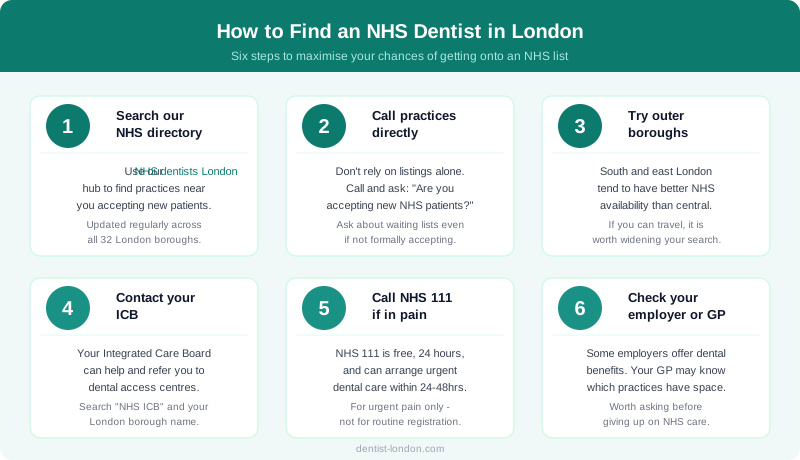
Step 1: Search our NHS dentist directory
Our NHS dentists in London hub lists practices across all 32 boroughs and tracks which ones are currently accepting new NHS patients. It is updated regularly and covers both adult and child NHS availability. Start here – it is the fastest way to get a current picture of what is available near you.
The NHS website also has a Find a Dentist tool at nhs.uk/service-search/find-a-dentist if you want to cross-reference. Bear in mind that any online tool has a lag – practices sometimes update their status slowly – so treat any results as a starting list rather than a guarantee.
Step 2: Call practices directly
Once you have a shortlist from our directory, call each practice rather than relying on what their listing says. Ask specifically: “Are you accepting new NHS adult patients?” If the answer is no, ask: “Do you have a waiting list, and how long is it?”
Some practices operate informal waiting lists even when not formally accepting patients. Getting on that list can be valuable – people do move on, and practices do reopen.
Step 3: Try boroughs outside central London
NHS availability is uneven across London. Outer boroughs – particularly in south and east London – tend to have somewhat better NHS availability than central and west London. If you can travel, it may be worth searching practices in neighbouring boroughs.
Browse our south London dentist directory or east London dentist directory to find practices in these areas, and filter for NHS providers.
Step 4: Contact your Integrated Care Board
Each London borough falls under an NHS Integrated Care Board (ICB). ICBs are responsible for commissioning dental services in their area and can sometimes help patients who are struggling to register. To find your ICB, search “NHS ICB” followed by your London borough name.
ICBs can also refer patients to dental access centres – dedicated NHS facilities set up specifically to see patients who cannot get a regular dentist.
Step 5: Call NHS 111 if you are in pain
NHS 111 is available 24 hours a day and can help you find urgent NHS dental care. If you are in pain or have an urgent dental need, call 111 and ask for an urgent dental appointment. You should be offered an appointment within 24 to 48 hours.
NHS 111 is not a route to registering with a permanent NHS dentist – it is for urgent and emergency care. But if you are in pain, it is the right first call.
Step 6: Ask your employer or GP
Some London employers – particularly large companies and the NHS itself – have occupational dental benefits or access to dental networks. Your GP surgery may also hold a list of local NHS practices or know which ones have recently started accepting new patients. It is worth asking both before giving up on finding NHS care.
What to do if you cannot find an NHS dentist
If you have exhausted these options and cannot register with an NHS dentist, your realistic choices are:
- Go private for routine care. Private dental costs in London are significantly higher than NHS charges, but a private check-up typically costs £55-100 and will identify and prevent problems from getting worse. Our London dental costs guide covers private prices in detail.
- Use a dental school. London has several dental schools – including King’s College London Dental Institute and Barts and The London Dental Institute – that offer supervised treatment at reduced rates. Appointments take longer, but quality is overseen by qualified professionals.
- Check eligibility for free treatment. If you receive certain benefits or are on a low income, you may be entitled to free NHS dental treatment. Check the criteria on our NHS dental charges guide.
- Apply for an HC3 certificate. If you do not qualify for completely free treatment but are on a low income, an HC3 certificate provides reduced-cost treatment. Apply using form HC1 at nhsbsa.nhs.uk.
Why is NHS dentistry so hard to access in London?
The shortage is driven by a combination of factors: years of underfunding, a dental contract that many dentists say makes NHS work financially unviable, and a workforce that declined sharply during the pandemic. NHS reforms introduced in April 2026 include 700,000 additional urgent NHS dental appointments and changes to the dental contract intended to make NHS work more viable for practices. These changes are a step in the right direction, but structural improvements will take time to filter through to patients trying to register today.
In the meantime, our NHS dentists in London hub tracks which practices are currently accepting new NHS patients across all 32 boroughs, updated regularly.
The situation is frustrating, and it is worth being persistent. Practices do reopen, waiting lists do move, and the reforms now in place should gradually improve the picture over the coming months and years.
This information is a general guide and is not a substitute for professional dental advice. NHS availability changes frequently – always call practices directly to confirm current status.
If cost as well as access is a concern, our guide to affordable dental care in London covers NHS exemptions, dental schools, payment plans, and emergency options for patients who can’t afford to pay.